










By | Kamran Ashraf Bhat
In Jammu and Kashmir, the Lieutenant Governor’s recent order directing police and district authorities to act against “fake journalists” has sparked a debate that reaches far beyond the region’s borders. The administration’s concern is not unfounded. Instances of individuals misusing press credentials to intimidate officials or extract favors are real and troubling. Yet, the remedy now being proposed, allowing only those “verified” by the Department of Information and Public Relations to be recognized as genuine journalists, risks inflicting deeper harm on the freedom it seeks to protect.
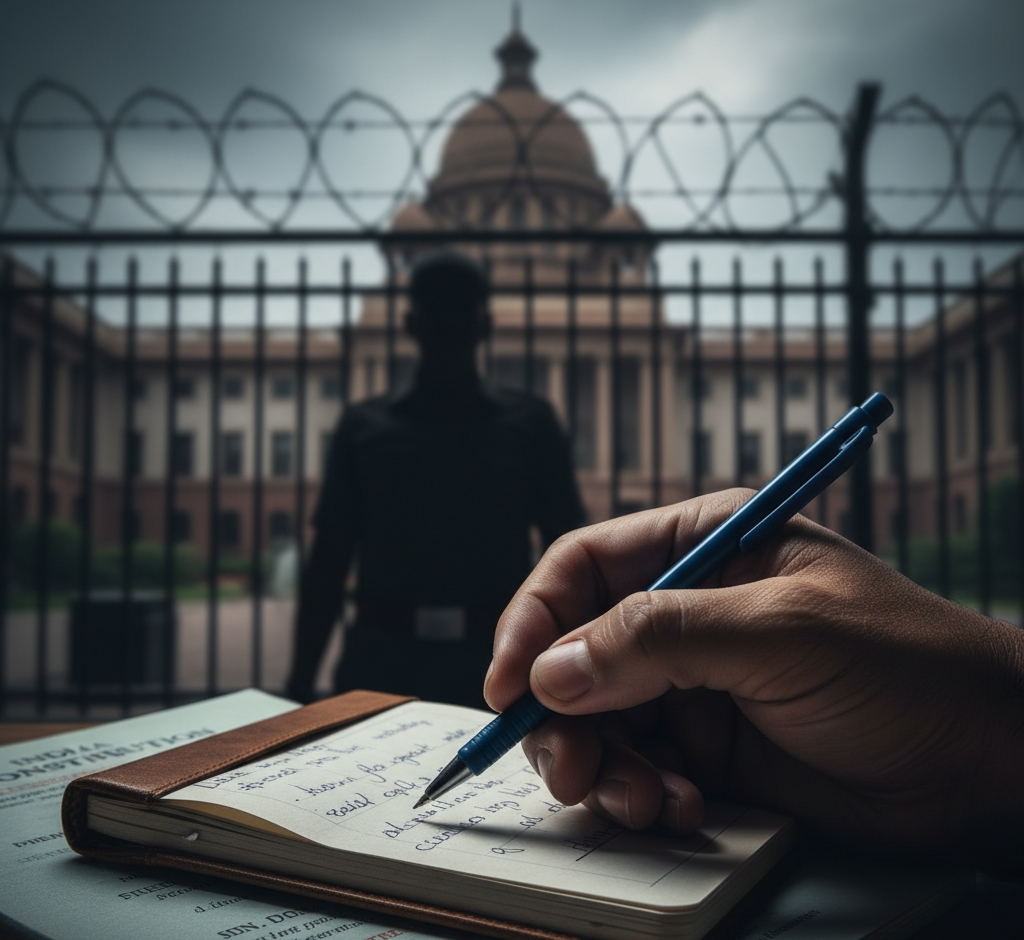
At the heart of the matter lies a question as old as democracy itself: Who gets to decide who is a journalist? The Indian Constitution, under Article 19(1)(a), guarantees to every citizen the right to freedom of speech and expression, a protection that, as the Supreme Court has long held, implicitly includes the freedom of the press. To make that freedom contingent upon government verification is to transform a constitutional right into a state-issued license. That is a perilous precedent.
There is no denying that journalism today suffers from an identity crisis. The explosion of digital platforms has blurred the boundaries between reporting and rumor. Social media pages masquerade as news outlets, while opportunists flash homemade press cards to gain access or leverage. But these excesses, however serious, do not justify the state stepping in as the sole arbiter of legitimacy. Fraud and impersonation are already crimes under the criminal laws; they should be punished as such, through law and investigation, not through bureaucratic filtering.
More troubling still is what this approach means for independent voices. Many of the most compelling journalism in many parts of world, including Kashmir, has come not from large media houses but from freelancers and small digital reporters who work without institutional affiliation. They are often the first to arrive at the scene, the last to leave, and frequently the only ones to tell uncomfortable truths. Under the new directive, their work may be discounted simply because their names do not appear in a government database. In the name of fighting imposters, the administration risks silencing precisely those who keep journalism alive.
The debate should not end there. If the state insists on verification, it must also confront a question long ignored in India’s media landscape: Why are those formally trained in journalism not given due professional recognition? Every year, universities produce hundreds of graduates in journalism and mass communication, young reporters equipped with ethics, research skills, and a grounding in media law. Yet their qualifications carry little institutional weight. Medicine, law, and engineering require accredited degrees to practice; journalism, a profession that shapes public consciousness, requires none. The result is an uneven field where serious journalists compete with opportunists and public trust erodes in the noise.
But professionalization cannot come through state control. The solution lies in empowering independent institutions, a reformed Press Council of India or a new autonomous accreditation body, to verify credentials, uphold ethical standards, and maintain a registry of working journalists. The key word here is independent. Any council that operates under government direction would merely replace one problem with another. Journalism must be answerable to ethics and truth, not to administrative approval.
If Jammu and Kashmir’s administration truly wishes to restore credibility in the media, it should start by convening a broad consultation that includes working journalists, editors, media educators, and representatives of civil society. The goal should be to draft a law that defines professional standards without infringing on constitutional freedoms. A law born of dialogue, not decree, could help India strike a long-overdue balance between accountability and independence.
Kashmir’s media landscape, shaped by years of conflict and resilience, deserves protection from both imposters and overreach. Cleansing the field of fraud is essential, but cleansing it of dissent is not. Journalism can be trained, refined, and regulated for ethics, but it cannot, and must not, be licensed. For once the power to define who may speak is placed in the hands of the state, truth itself will become a matter of official approval.
About the Author: Kamran Ashraf Bhat is an alumnus of Bahcesehir University’s Department of Cinema and Television in Istanbul. A former Executive Editor of Daily Inside Kashmir, he now serves as the CEO of Spotlight Media Organisation. Kamran Ashraf Bhat specializes in writing on geopolitical, geostrategic, environmental, International Relations and social issues