













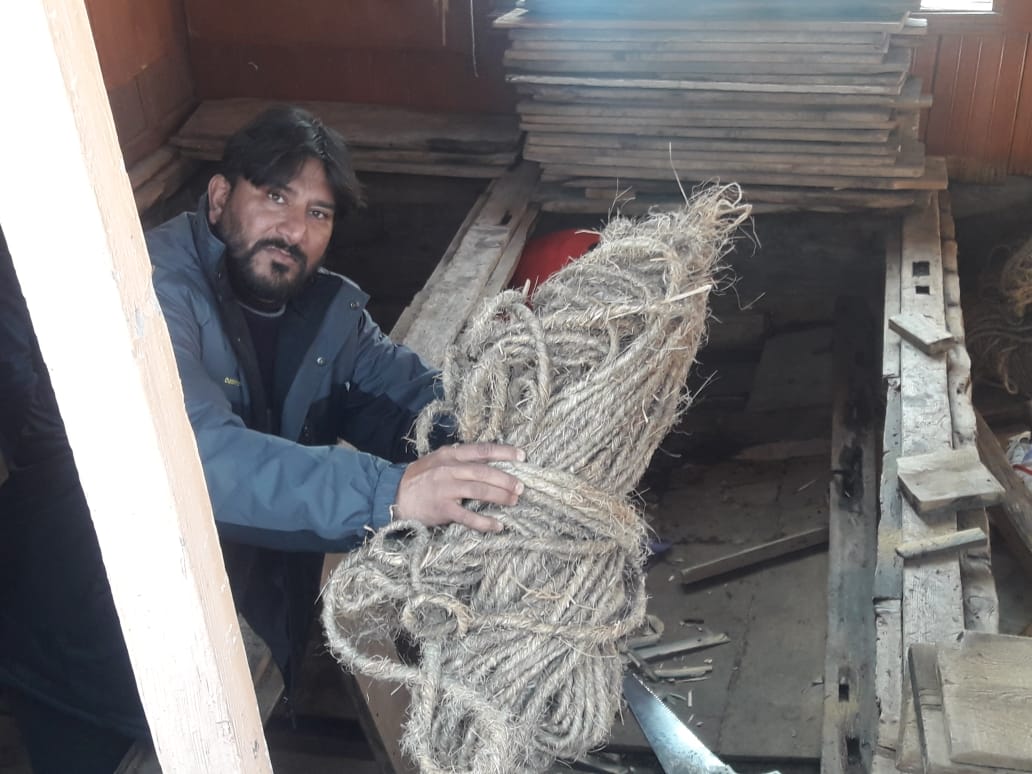
Srinagar: In the serene waters of Dal Lake, where the majestic houseboats have long stood as an emblem of Kashmir’s rich cultural heritage, a quiet crisis brews. Every year, these houseboats require a meticulous process known as caulking—a method of sealing the gaps between the planks on the boat’s underside, ensuring they remain watertight. This tradition, essential to the survival of these floating homes, involves using local grasses and costs each houseboat owner upwards of Rs. 50,000.
However, the last few years have brought unprecedented challenges to this time-honored practice. The first blow came on August 5, 2019, with the abrogation of Articles 370 and 35A. The government’s subsequent travel advisory brought the valley’s tourism industry to a standstill. For 17 long months, not a single tourist set foot in Kashmir, plunging the houseboat industry into a financial abyss.
The onset of the COVID-19 pandemic only deepened the crisis. With global travel restrictions and an ongoing lockdown, the once-thriving houseboat business has nearly collapsed. For owners like Mohammad Yakub Dunoo, spokesperson of the Kashmir Houseboat Owners Association, the situation is dire. With no income to fund the necessary caulking, more than ten houseboats have sunk in the past four months, and with the harsh winter approaching, many more are at risk.
Dunoo’s plea is heartfelt and urgent. He calls upon the Jammu and Kashmir administration and the Government of India to provide financial assistance to houseboat owners registered with the Department of Tourism. Without this support, he warns, the houseboats—a symbol of Kashmir’s unique heritage—may soon vanish. Future generations may only know them through photographs and stories, a once-vibrant tradition reduced to mere memories.
The caulking of houseboats is more than just maintenance; it’s a ritual that connects the present to Kashmir’s past. As these floating masterpieces teeter on the brink of disappearance, the need for intervention has never been more critical. Will the government step in to save this irreplaceable part of Kashmiri culture, or will these houseboats become relics of a forgotten time? The answer to this question will shape the future of one of Kashmir’s most beloved traditions.